Let’s face it: It’s hard to get a freemium model right. While thinking through pricing and packaging for poketto.me, I looked at a lot of other B2C apps—and most of them had some flaw, inconsistency, or irritation in their approach.
One striking example is Strava. The fitness app is wildly popular (150M+ users worldwide) and valued at $2.2B. But their free-to-paid conversion strategy seems to be struggling. Why?
👉 The core value (activity tracking) is fully commoditized, with little room to differentiate (Garmin Connect, Nike Run Club, Apple Health, etc. essentially all do the same thing).
👉The network effect (“All my friends are there!”) is a lot smaller than with social networks. Surely nothing that Strava can be the house on.
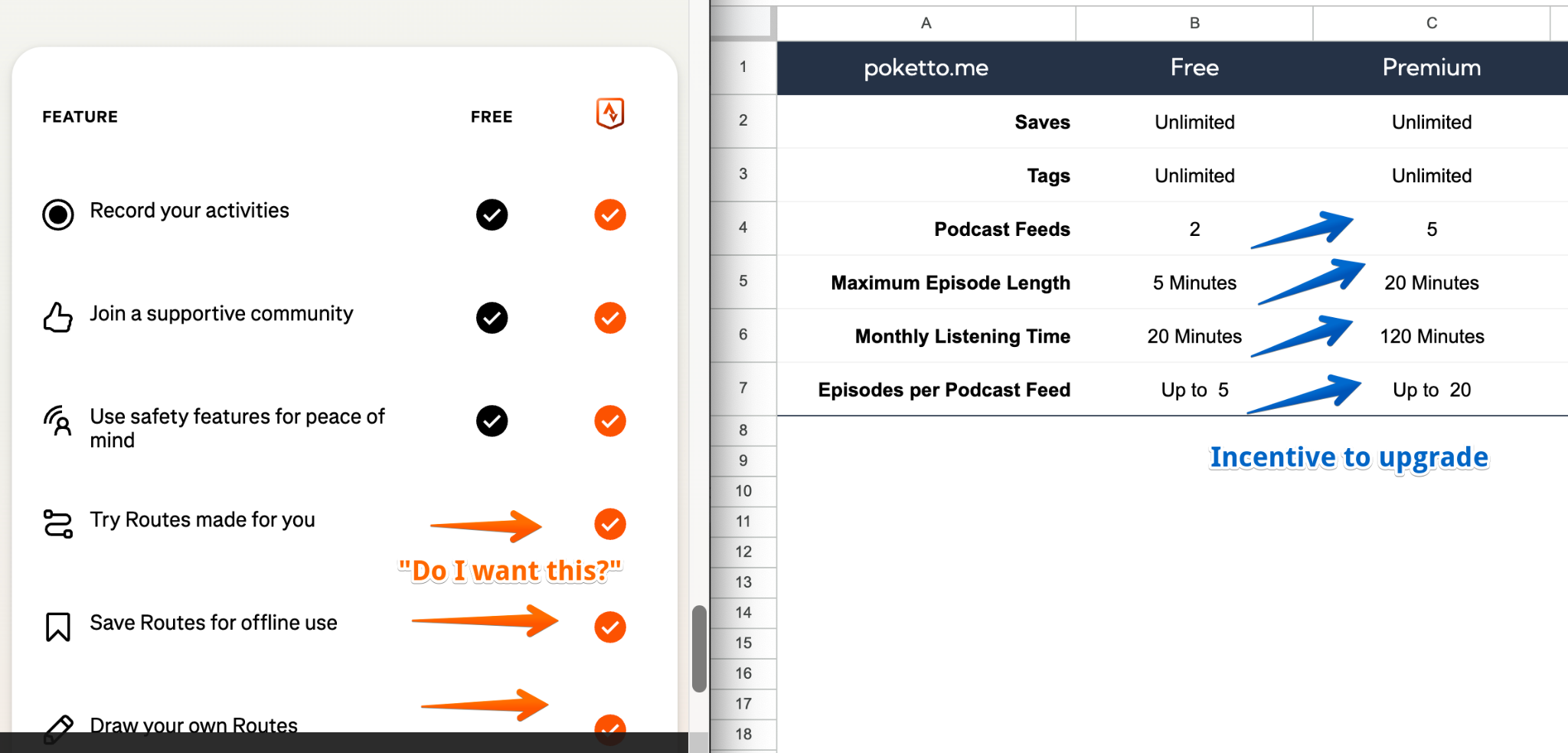
👉 Their differentiating features (custom routes, “AI Coach,” etc.) are binary: they either go into free or into premium.
👉 The dilemma? If they add new features to free, there’s no incentive to upgrade. If they lock them behind premium, most free users never even know what they’re missing.
Their workaround has been to push free users into “free trials” of premium — even auto-upgrading accounts for a month to showcase paid features. But: consumers, including yours truly, are skeptical. Will the subscription auto-cancel? Do I even want to invest the time to explore these extra features? The whole approach feels clunky and a bit needy.
For poketto.me, I’m trying to follow a different philosophy: features that are inherently binary (like highlighting, search, or advanced organization) will, by and large, remain part of the free plan. The real differentiators for premium will be usage-based, with clear limits for free users.
The podcast functionality is the clearest example: free users can create one podcast feed and have a cap on their monthly text-to-speech minutes. This way, they can experience the feature in full — and, ideally, upgrade to premium not because they’re locked out, but because they want to use it more.