I didn’t coin this phrase (sadly), but it keeps proving itself true—especially now that I’m working on GTM details for some of the more advanced features in poketto.me.
Most users don’t care how your app works. They care what it does for them—and whether that’s worth paying for.
Since LLMs became easy to embed, companies started slapping “powered by AI” stickers on everything as if that alone justified a price tag. But unless the user clearly feels the value, it doesn’t matter what's under the hood. Case in point: Garmin’s hilariously underwhelming $7/month “AI subscription”. The so-called “insights” offered nothing users couldn’t deduce themselves—or the app couldn’t have generated with much simpler logic.
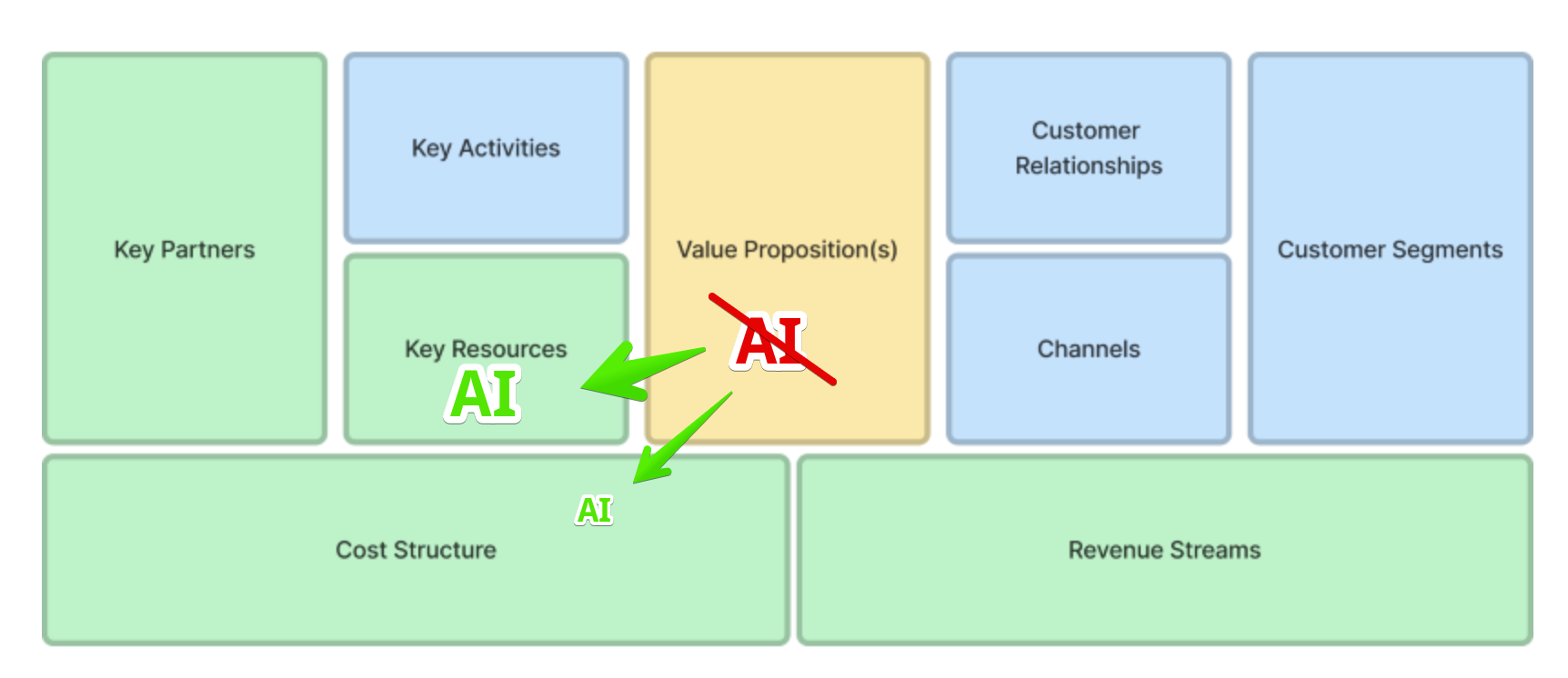
Look at your business model canvas: AI belongs in the Resources box, maybe the Cost Structure. Not in Value Propositions.
For poketto.me, AI is an enabler—not the pitch. It lets me build things that weren’t possible just a few years ago. But what matters to users is the value they receive:
🟢 Seamless translations
→ Pain: Content isn’t in my language; copying and pasting stuff to and from translation apps is a hassle
→ Gain: Automatic, high-quality translations that just work
🟢 Smooth PDF reading on small screens
→ Pain: Zooming, pinching, and endless scrolling
→ Gain: PDFs reformatted for effortless mobile reading
🟢 Turning web content into great audio
→ Pain: Reading long texts on glossy screens is tiring, most TTS tools are clunky, and the TTS features of most websites only works while online
→ Gain: Clean, rephrased, high-quality audio, available offline via any podcast app
AI helps enable these gains. But it’s not what I’m selling.
PS: I once wrote a blog post on the value proposition canvas and its friends—still holds up.