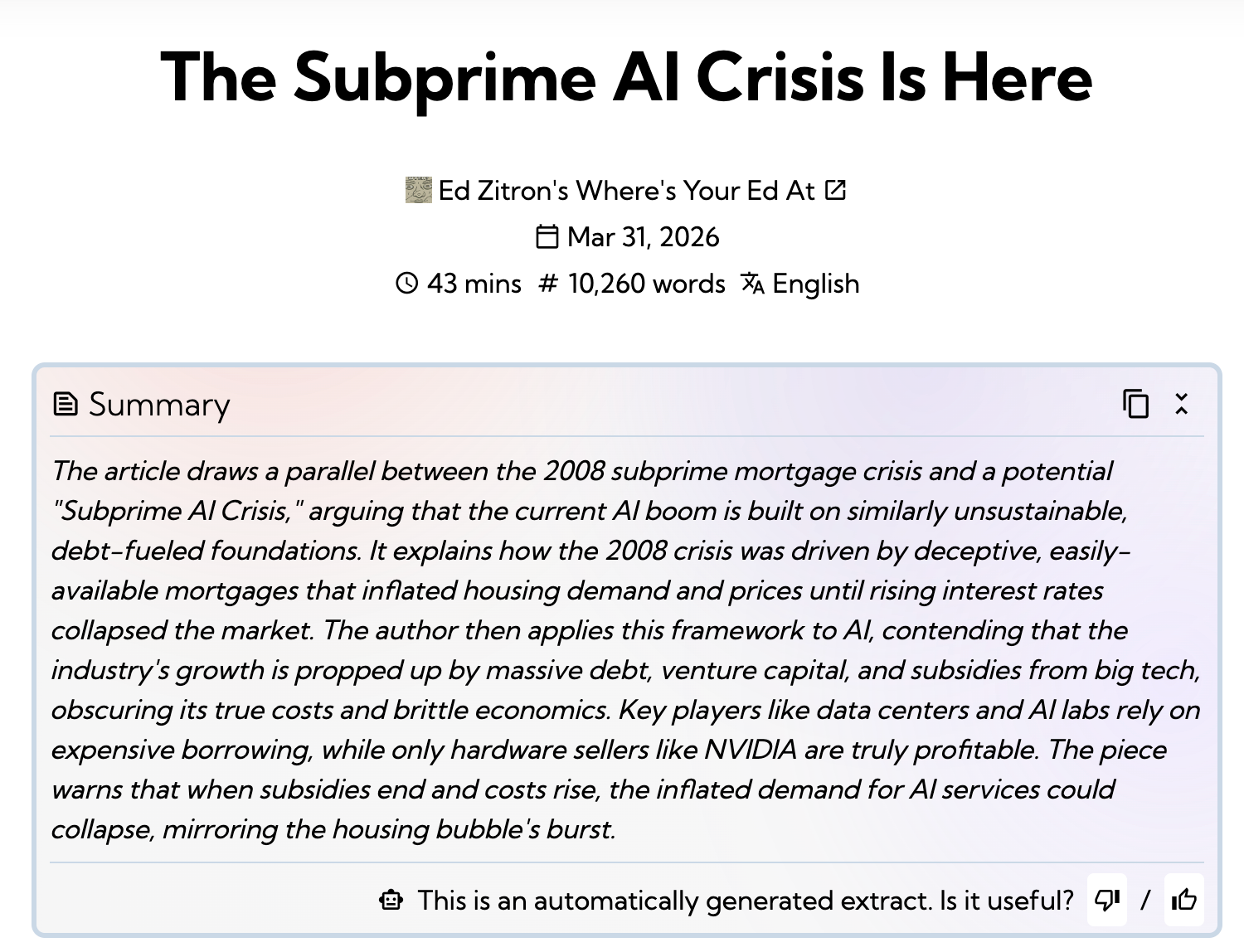
Here’s one aspect of conscientious AI use that is often overlooked: Transparency. Users have a right to know if the information they’re viewing was created—or at least curated—by a human being or an algorithm. In the EU, this right is enshrined in the AI Act, albeit not in a strict manner. According to the Act, companies must inform users when they are interacting with an AI system unless it is obvious. Additionally, AI systems that generate synthetic content, such as deepfakes, must mark their outputs as artificially generated.
With parlametrics, I ran into a particularly interesting edge case in this regard. As I mentioned in Choose the right tool for the job, my app automatically assigns keywords to new inquiries. Those are displayed until the parliament actually categorizes them, whence my “predicted” keywords are replaced with the ones that a human surveyor has assigned. That, of course, makes the UI particularly tricky.
For now, I chose to highlight this with a different background color and an explanatory tooltip text.
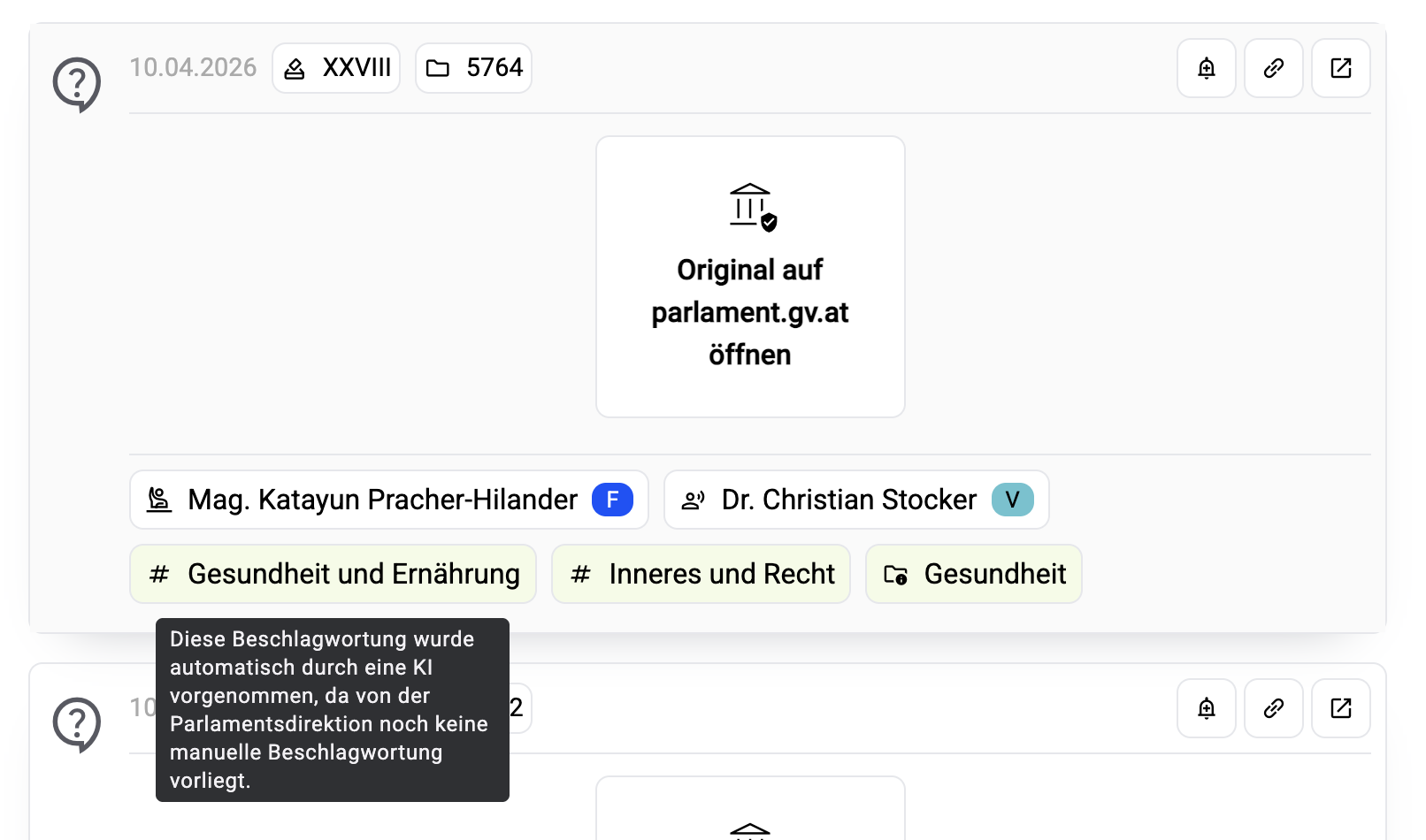
It may not be optimal—the color isn’t intuitive, and the tooltip isn’t accessible—but it’s a start. Needless to say: Better ideas are welcome!
I’ve taken a similar, but slightly more colorful, approach with poketto.me. For every article you save, poketto generate a concise summary, using an LLM. I’ve also added a disclaimer and a different background color to make that clear—even though, in this case, there’s a lot less room for confusion about whether this cloud have been written by a human.